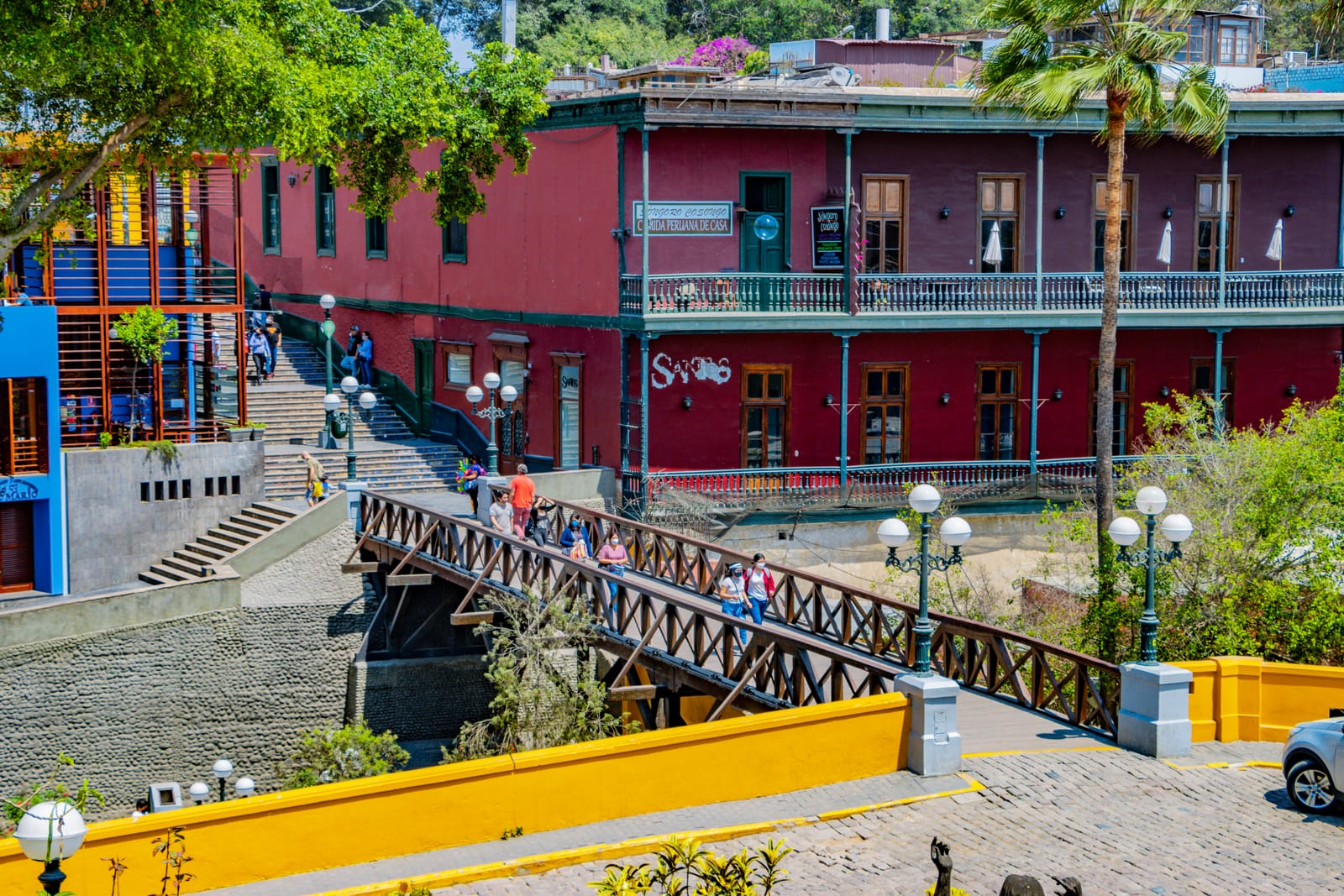
Bridge of Sighs (Puente de los Suspiros) in Barranco, historic wooden bridge in Lima, Peru

Independent tourist guide

Bridge of SighsPuente de los Suspiros · Barranco · Lima · Perú

A wooden footbridge from 1876 suspended above the Bajada de Baños, a symbol of bohemian Barranco, urban memory and the music of Chabuca Granda.

Real photo: HLaiza, Wikimedia Commons, CC BY-SA 4.0 license.

Welcome to this guide to the Bridge of Sighs —known internationally as Puente de los Suspiros—, the best-known wooden pedestrian footbridge in Barranco, a district in southern Lima (Lima Region, Peru). Built in 1876 over the ravine of the Bajada de Baños and declared a National Monument, it is both a cultural asset registered by MINCETUR and the most photographed postcard of the district. This independent, non-profit guide brings together its documented history, its legends, the services in the area and practical information for visiting it.

In the immediate surroundings

From the bridge you can continue on foot to the Ermita de Barranco, the Municipal Park, the Bajada de Baños and the Plazuela Chabuca Granda, all within the same historic and pedestrian circuit.

Open location in Google Maps

Current status: the walkway reopened in August 2026 after six months of conservation and reinforcement work, with new lighting and restoration of wooden elements.

View source
Rating4.5 / 524,656 reviews on the provided listing
AccessFreeNo paid entry
Published access24 hoursGoogle Maps; MINCETUR records 08:00–20:00
SettingMonument ZoneHistoric center of Barranco

History of the Bridge of Sighs

A footbridge that came to define Barranco’s landscape

The District Municipality of Barranco places the bridge’s construction in 1876, during the administration of Francisco García Monterroso. Its function was practical: to join the two sides of the ravine and ease passage between the Ayacucho sector and the Ermita.

The bridge was damaged during the War of the Pacific and repaired in several stages. In 2014 a comprehensive restoration reinforced the walkway with huayruro wood and added lighting. In 2026 a new conservation and reinforcement intervention was completed, after which the walkway reopened to the public. Its image is also linked to the work of Chabuca Granda, who dedicated a famous composition to the place.

Today it forms part of the heart of Barranco’s Monument Zone and appears in Peru’s National Inventory of Tourism Resources as a cultural asset of architecture and urban spaces.

The legend, set apart from history

Popular tradition invites you to cross the bridge holding your breath while thinking of a wish. It is part of Barranco’s imagination and should be understood as a legend, not a verified historical fact.

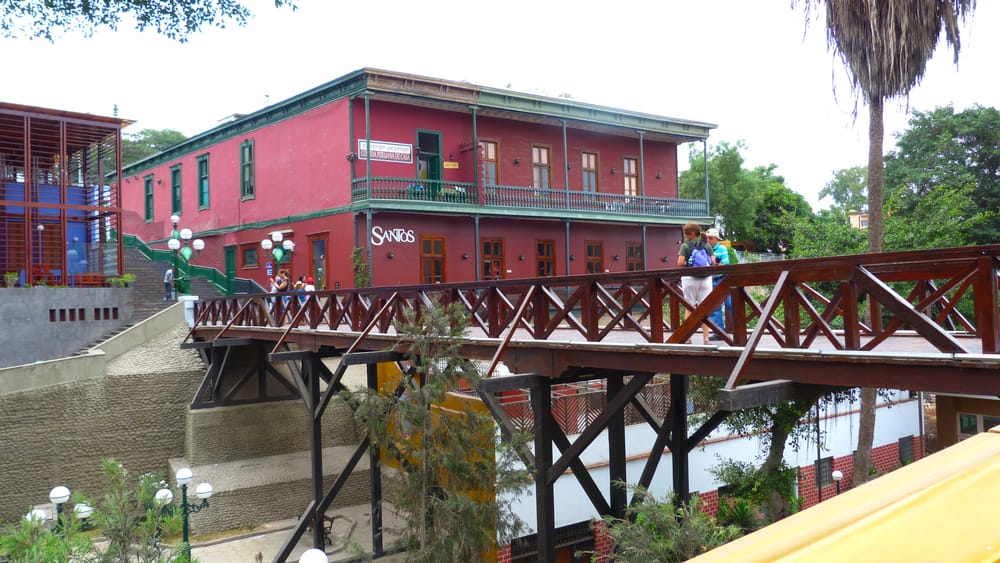
Wooden structure of the Bridge of Sighs in Barranco
Fotografía real: Ivan Brehaut L., Wikimedia Commons, CC BY-SA 4.0.

Timeline

A century and a half of history in dates

From its 19th-century inauguration to the 2026 reopening, the bridge concentrates much of Barranco’s urban and heritage history in a few dates.

  1. 1876

    Inauguration

    The bridge was inaugurated on 14 February during the term of Barranco’s first mayor, Francisco García Monterroso (1875–1878). It was built to bridge the ravine with initial dimensions of 44 m long, 3 m wide and 8.5 m high, according to the municipal record.

  2. 1881

    War of the Pacific

    During the occupation of Lima, fire damaged part of the bridge’s structure. The municipal record notes its restoration with the help of Patricio Lynch; the walkway again joined both sides of the ravine.

  3. 1960

    Music and memory

    Peruvian composer Chabuca Granda spread the waltz «Puente de los Suspiros». According to the Municipality of Barranco, that song popularized the bridge’s name and forever tied it to the district’s musical memory.

  4. 1973

    Protecting the setting

    Supreme Resolution N.º 2900-72-ED, published on 23 January, declares the Monument Zone of Barranco —the historic setting where the bridge stands— a National Monument.

  5. 1989

    National Monument

    Jefatural Resolution N.º 191-89-INC/J, of 26 April, declares the Bridge of Sighs itself a National Monument (PROMPERÚ register).

  6. 2014

    Comprehensive restoration

    An intervention funded by the COPESCO Plan rehabilitated the walkway: structural reinforcement with huayruro wood and new LED lighting, according to the municipal record.

  7. 2026

    Reopening

    In August 2026 the walkway reopened after six months of conservation and reinforcement work, with new lighting and restoration of wooden elements (Andina).

Sources: District Municipality of Barranco (record and “History of Barranco”), PROMPERÚ, MINCETUR and Andina.

Stories and legends

Legends, music and Barranco’s memory

The bridge’s value is not only architectural: its history intertwines with music, the seaside resort, artists and the traditions that gave the neighborhood its character.

Local tradition

The wish while crossing

Barranco’s popular tradition says that whoever crosses the bridge holding their breath while thinking of a wish will see it come true. It is a belief of local imagination, not a certified historical fact: it is part of the charm of the walk.

Music

The waltz that fixed the name

In 1960, Chabuca Granda popularized the bridge’s name with her waltz «Puente de los Suspiros». Today the plaza honoring the artist is a few steps away, within the same historic circuit of Barranco.

Curiosity

Why “of Sighs”?

The name evokes, by romantic analogy, the Bridge of Sighs in Venice. It is also said that lovers and strollers who stopped to gaze at the ravine let out a sigh as they crossed. These are versions of popular imagination: there is no single certified official explanation.

Context

A seaside and bohemian district

Barranco grew in the 19th century as a summer seaside resort of Lima. From the early 20th century it was a refuge for poets, painters and bohemians; the municipal record itself describes its bohemian atmosphere and cultural appeal today.

Context

The Bajada de Baños

The historic path that runs beneath the bridge led to the seaside baths of the resort. In Barranco’s urban memory there also remains the funicular that connected the upper part with the beach area, evoked today by its old station.

Heritage

A cultural asset of Peru

The bridge appears in Peru’s National Inventory of Tourism Resources (MINCETUR record 5585) as a cultural asset of architecture and urban spaces, and is one of the district’s most recognized postcards.

Note: The legends and versions of local imagination are presented as such, separate from the historical facts documented in the official sources cited.

Practical information

Visiting the Bridge of Sighs without missing what matters

◌

Entry and cost

Access to the bridge is free. There is no ticket office to cross it and no entry fee recorded by MINCETUR.

◷

Best time

The afternoon offers pleasant light for photography and lets you continue to Barranco’s viewpoints. The early hours are usually quieter.

⌁

Suggested time

Allow 45 to 90 minutes for the bridge and the Bajada de Baños; reserve two or three hours if you extend the walk through historic Barranco.

P

Parking

It has no parking of its own. Given the pedestrian and historic character of the surroundings, it is preferable to arrive without a car when possible.

Hours: Hours: Google Maps currently shows 24-hour access; MINCETUR’s tourism inventory records a reference visiting window of 08:00–20:00. To plan a visit, use that window as a conservative reference and check municipal notices if there is maintenance, events or temporary closures.

Services and amenities

How to sort out basic services near the bridge

The bridge sits within a pedestrian historic center, so some services are not at your doorstep. This guide lists categories of services and where they are usually found in Barranco, without promoting any establishment or receiving payments from businesses.

01Sin marcas

Public restrooms (WC)

There is no permanent, free public restroom right next to the bridge. In the historic circuit the usual option is to have something at a café or restaurant that offers its restrooms to customers; some cultural venues and high-traffic points also have paid facilities.

How to locate by type: public restrooms · toilets

02Sin marcas

Parking

The bridge has no parking of its own and its immediate surroundings are narrow, pedestrian-use streets. Those arriving by car usually use private parking lots or authorized spaces on the district’s avenues and walk the last stretch. Always respect signage and restricted zones.

How to locate by type: parking lot · car park

03Sin marcas

Restaurants and cafés

The Bajada de Baños and the streets of the historic center concentrate cafés, taverns, Peruvian-cuisine restaurants and cevicherias. Prices, hours and payment methods vary by place: check the visible menu or card before ordering.

How to locate by type: café · restaurant in Barranco

04Sin marcas

Lodging

Barranco offers boutique hotels, hostels and guesthouses, many set in restored old mansions. Book in advance in high season, holidays and weekends; if you seek more economical options, neighboring districts broaden the offer.

How to locate by type: hotels and hostels in Barranco

05Sin marcas

Markets and shops

The historic center abounds with convenience stores, groceries, bakeries and art and craft galleries. Larger supermarkets and traditional markets are on the main avenues near the district, outside the bridge’s pedestrian circuit.

How to locate by type: convenience store · market

06Sin marcas

Fuel and EV charging

There are no service stations within the historic center. Gas stations and EV charging points are on the avenues leading into Barranco; it is best to fuel up before reaching the pedestrian area.

How to locate by type: gas station · EV charger

07Sin marcas

ATMs and cash

There are ATMs at bank branches and commercial areas of the district, especially around its main avenue. Some historic-center businesses operate with cash, so it is advisable to carry some local currency.

How to locate by type: ATM

08Sin marcas

Pharmacies and health

Chain pharmacies are present on the district’s main avenues and nearby accesses. For minor emergencies there are public health centers; major emergencies are treated at Metropolitan Lima hospitals.

How to locate by type: pharmacy · health center

Neutrality note: this site is an independent, non-profit project. It does not mention or recommend specific brands or businesses: it only indicates service categories. Verify availability, hours, access and conditions at the time of your visit.

Transport and access

How to get to the Bridge of Sighs (Puente de los Suspiros)

From Jorge Chávez International Airport (LIM)

The airport is in Callao, about 20–30 km from Barranco. The most direct option is an authorized taxi or a ride-hailing app (approx. 45–70 min depending on traffic). Public transport involves transfers and more time, so allow plenty of margin.

By Metropolitano

MINCETUR documents a route from the Central Station to the Boulevard Station. From Boulevard you continue on foot about 450 m, roughly 10 minutes. From the airport or the Central Station it connects with the network via transfers.

By taxi or ride-hailing app

Indicate “Puente de los Suspiros, Barranco” or “Jr. Batallón 271”. At peak demand it is best to get off near the Municipal Park and walk the last stretch through the historic center.

On foot within Barranco

The bridge is two blocks from the Municipal Park according to MINCETUR’s record. It is a short walk through the historic and pedestrian core of the district, ideal for continuing to the Bajada de Baños.

Map of the Bridge of Sighs

Jr. Batallón 271, Barranco 15063, Lima, Peru · Location code: VX2G+8X

Reference: Jr. Batallón 271, Barranco 15063 · Plus Code VX2G+8XOfficial Tourism Portal of Peru

Climate and best season

Lima’s climate in Barranco

Lima’s microclimate shapes the visit experience: it helps to know what weather to expect before planning the walk across the bridge, the Bajada de Baños and the viewpoints.

A desert with coastal fog

Lima lies on the Pacific desert coast, yet its climate is mild almost all year. Between May and October the garúa (coastal fog) dominates: grey skies and a humidity that feels cold. Between December and April the sun and humid heat prevail.

Best time to go

Summer (December to April) brings the clearest skies and the best light for photos and sunsets. In winter the bridge is also visited comfortably: a light layer and closed shoes are enough. Year-round, check the forecast before heading out.

What to bring

A light jacket or scarf (for the sea breeze and garúa), comfortable non-slip shoes for the slopes, sunscreen and water in summer, and a camera for the golden afternoon light.

Live forecast

Barranco · bridge coordinates (12.149° S; 77.023° W)

Source: Open-Meteo

Checking the current weather…

Next 7 days

Preparing the forecast…

Data generated when compiling the site on Sep 23, 2026, 1:30 AM (Lima time). They refresh in your browser.

When to visit

Season-by-season visit strategy

Lima is a desert-coast city: it essentially has two faces, the sunny summer and the misty winter. This guide summarizes what to expect each season to help you plan the trip to the Bridge of Sighs and the Bajada de Baños.

SeasonMonthsClimate & seaIdeal forWhat to bringCrowds
SummerDecember – MarchSun, humid heat and clear skies. Coastal afternoons often exceed 25–28 °C, with a sea breeze in the afternoon.The best light for photography, golden sunsets and outdoor walks without the cold.Sunscreen, cap or hat, water, light clothing and comfortable shoes.High (summer holidays and festivities).
AutumnApril – MayTransition: the sun yields and the first coastal fogs appear. Mild temperatures, between 18 and 23 °C.Quiet walks and diffuse light, very pleasant for portraits and eating outdoors.A light jacket; mornings and nights can feel cool.Medium.
Winter / Coastal fogJune – OctoberGrey skies, coastal fog (garúa) and high humidity. It hardly rains; temperatures hover around 14–19 °C.Walks without heat, fewer people and the misty, bohemian atmosphere that characterizes the neighborhood.Jacket or scarf, closed and non-slip footwear for damp slopes.Low.
SpringNovemberThe garúa recedes and the sun returns. Variable but pleasant climate, with cool mornings and temperate afternoons.Good balance between light and moderate crowds before summer starts.Layers: cool morning and warmer afternoon.Medium.

Best light & photos

Summer (Dec–Mar): clear skies and golden sunsets over the ravine and the bridge.

Fewer people

Winter (Jun–Oct): garúa and misty weather, but with the advantage of far fewer people.

In short

The bridge is visited year-round; choose summer for the light and winter for the calm. Always check the forecast before leaving.

Quick monthly view

JanFebMarAprMayJunJulAugSepOctNovDec
Sun · heatSun · heatSun · heatTransitionFogFog · coolFog · coolFog · coolFogFog · sun returnsTransition · sunSun · heat

Climate, sea and nature

Barranco’s natural environment, explained

Understanding Lima’s coastal climate, the state of the sea and local wildlife helps plan the visit better and care for the place. This section is educational: for specific decisions, consult the official Peruvian sources cited at the end.

Climate

Lima’s desert coast

According to SENAMHI’s climate records, Lima is a desert coast with two marked seasons: a hot, humid summer (December to March) and a winter covered by the garúa (May to October). Temperature ranges are small —it rarely gets very cold or very hot— and humidity is felt all year.

This means the bridge and the Bajada de Baños are visited well in any month; only whether you seek full sun (summer) or a misty atmosphere with few people (winter) changes.

Sea and water

Water quality on the coast

The beaches of Lima’s Costa Verde are monitored by the health authorities (SUNASS and SEDAPAL publish notices about bacteriological levels). At certain times of year, no-swimming recommendations are issued after rains or due to discharges.

The bridge crosses the ravine of the Bajada de Baños, not a bathing area. If you plan to go down to the shore or nearby beaches, check the current official notices before entering the sea.

Wildlife

Coastal wildlife

On the coast and the malecón it is common to see seabirds —pelicans, gulls, herons and shorebirds—, lizards on the rocks and, in the neighborhood, the well-known cats of Barranco. Seals resting on the rocks may eventually be spotted from the shore.

They are free animals: observe them without chasing or feeding them, and do not leave food in sight. This protects both the wildlife and the heritage of the district.

Outreach sources: climate and climate normals from SENAMHI (Peru’s National Service of Meteorology and Hydrology); water quality and beach notices from SUNASS and SEDAPAL. The information is indicative and may vary; verify before your visit.

Immediate surroundings

A walk that continues beneath the bridge

The Municipality of Barranco groups the bridge with a series of cultural spaces of the historic circuit. The Bajada de Baños is the natural axis to keep walking toward old mansions, art, gastronomy and views toward the Costa Verde.

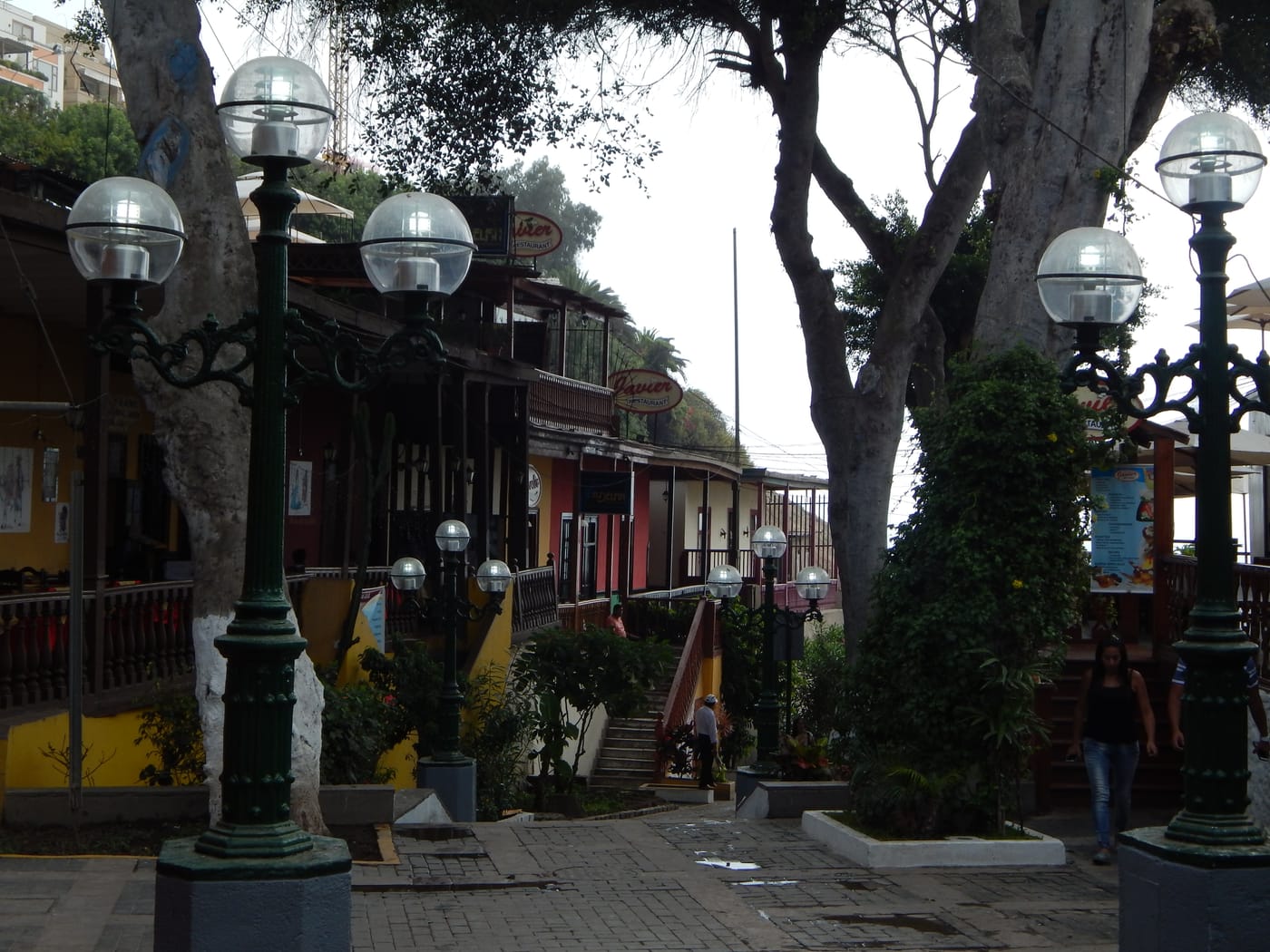
Bajada de Baños in Barranco, historic path beneath the Bridge of Sighs
Fotografía real: Nina Zaitceva, Wikimedia Commons, CC BY-SA 4.0.

Bajada de Baños

The old ravine path runs beneath the bridge and connects the center of Barranco with the coastal sector.

The Ermita de Barranco

A historic temple that forms part of the bridge’s immediate landscape and of the district’s monumental ensemble.

Municipal Park

A central reference point to start a walk through historic Barranco and reach the bridge.

Plazuela Chabuca Granda

A space linked to the memory of the Peruvian composer whose work is intimately associated with the bridge.

Mirador Catalina Recavarren

A viewpoint of the historic circuit with perspective toward the Costa Verde and Barranco’s coastal edge.

Old Funicular station

A vestige of the old system that connected the upper part of Barranco with the beach area.

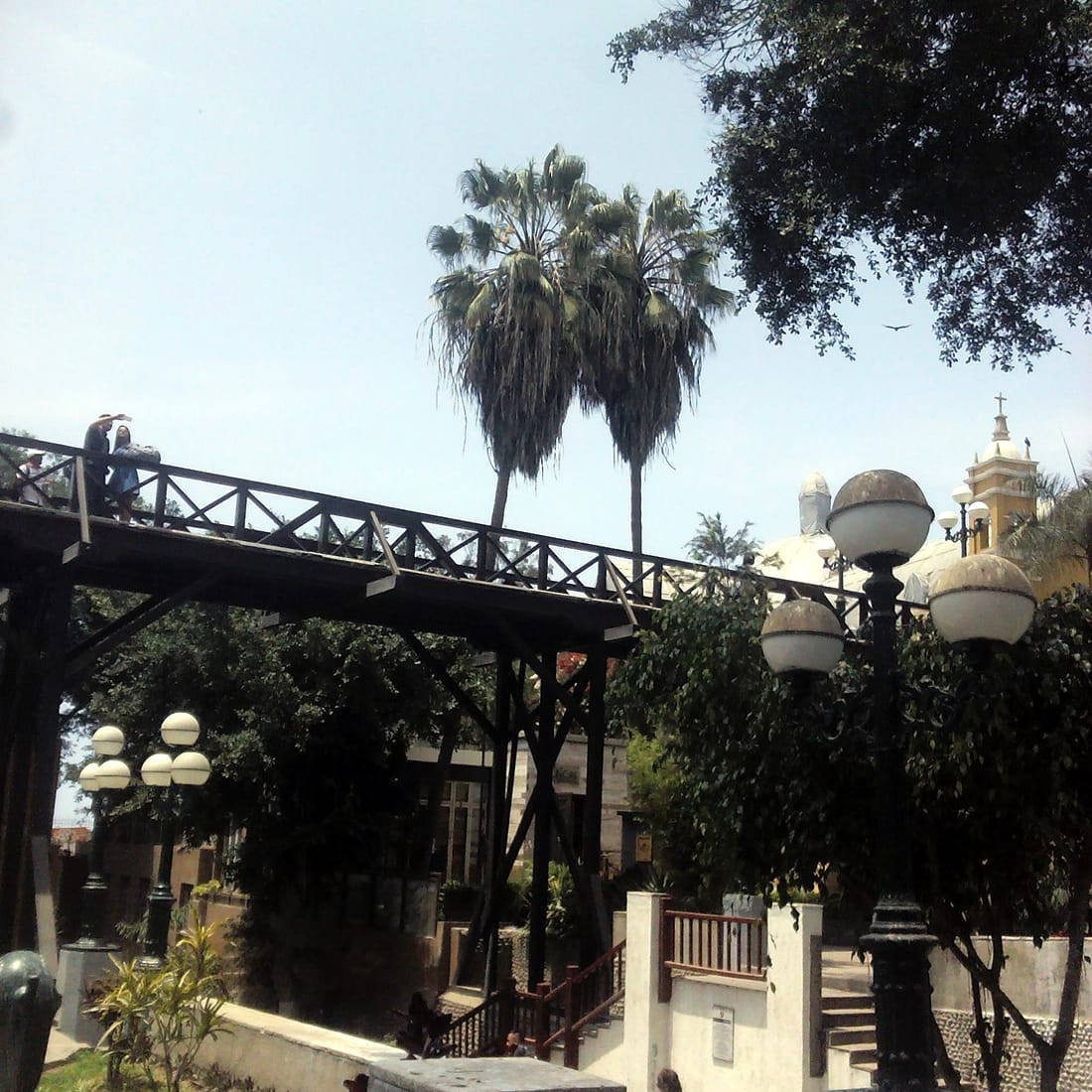
Bridge of Sighs with palm trees and the Ermita de Barranco in the background
Fotografía real: Herwarth Morales, Wikimedia Commons, CC BY-SA 4.0.

Flavors of Barranco

What to eat near the bridge

Barranco’s own tourism office presents gastronomy as one of the district’s routes, and the Bajada de Baños gathers cafés, taverns and eateries. This guide receives no payments or commissions from establishments.

CevicheTiraditoAnticuchosCausa limeñaPicaronesPisco sour

Tip: compare visible menus and prices before ordering and confirm any dietary needs with the establishment.

How to tour it

Itineraries and plans by traveler

There is no single way to visit the Bridge of Sighs. These plans are indicative and are grouped by type of traveler and by available time. They do not promote businesses: they indicate categories and public places of the historic circuit.

Families with children

👨‍👩‍👧 Calm, flat and with stops

Prioritize flat stretches and breaks. The Municipal Park and the Plazuela Chabuca Granda are comfortable with a stroller; the Bajada de Baños has slopes, so just walk a stretch and come back.

  • •Start at the Municipal Park (shade, benches and restrooms in nearby venues).
  • •Cross the bridge and the Plazuela Chabuca Granda at your own pace.
  • •Go down a few meters along the Bajada de Baños and return without forcing the descent.
  • •Close with a coffee or ice cream in the historic center.
Photography and nature

📷 Golden light and framing

The bridge and the ravine give their best photos at the golden hour. In summer, take advantage of clear skies; in winter, the garúa creates a very peculiar misty atmosphere.

  • •Arrive 1–2 h before sunset for warm light on the wood and railings.
  • •Go up to the Mirador Catalina Recavarren to frame the Costa Verde.
  • •Include the Ermita and the walls of Barranco (murals and street art).
  • •Bring a cloth for the lens if there is garúa.
Low effort and accessible

♿ Without steep slopes

Avoid the Bajada de Baños, which has slopes and steps. You can enjoy the bridge and the historic surroundings along the flat streets of the center and the plazas.

  • •Walk the Municipal Park and the Plazuela Chabuca Granda (both flat).
  • •Cross the bridge on its upper deck, without going down to the ravine.
  • •Rest on the park benches and the cafés in the area.
  • •If you need ramps or elevators, ask at the Visitor Center or the Municipality.

Half-day route (2–3 h)

The essentials without rush.

  1. 1

    Municipal Park of Barranco

    Flat starting point, with shade and a reference of the district.

  2. 2

    Bridge of Sighs

    Cross the walkway and read the National Monument plaque.

  3. 3

    Plazuela Chabuca Granda

    Tribute to the composer whose waltz named the bridge.

  4. 4

    Bajada de Baños (round trip)

    Go down a stretch to feel the ravine and come back.

  5. 5

    Coffee or snack

    Close at a café in the historic center.

Full-day route (4–5 h)

Historic and bohemian Barranco from end to end.

  1. 1

    Municipal Park and Barranco Museum

    Context of the district and its cultural life.

  2. 2

    Bridge of Sighs and Plazuela Chabuca Granda

    The core of the walk.

  3. 3

    Bajada de Baños to the shore

    Descend calmly to the Costa Verde.

  4. 4

    Ermita de Barranco

    Historic temple next to the ravine.

  5. 5

    Mirador Catalina Recavarren

    Panoramic view of the coastline.

  6. 6

    Food and murals

    Lunch and urban-art walk through the neighborhood.

Outreach and care

Science, history and visitor responsibility

Knowing the place also means caring for it. This independent guide gathers historical and natural context so that the visit is informed and respectful of the heritage, the environment and the community of Barranco.

🏛️

Respect for heritage

The bridge and its surroundings are part of Barranco’s Monument Zone, declared a National Monument. Do not write or stick anything on the wood or the walls, do not climb the railings and do not drive objects into them: it is heritage for everyone.

🗑️

Zero waste

Carry your waste with you until you find a recycling or trash point. The historic center is a residential neighborhood; keeping it clean is the responsibility of whoever visits it.

🤝

Coexistence with the neighborhood

Barranco is an inhabited district, with neighbors, businesses and bohemian nightlife. Moderate noise, respect homes and private areas, and enjoy the atmosphere without disturbing those who live there.

⚠️

Safety in the ravine

The Bajada de Baños has slopes, steps and, with the garúa, slippery surfaces. Wear closed, non-slip footwear, do not lean over unprotected edges and watch minors near the ravine.

🐱

Wildlife and environment

Cats, seabirds and lizards are part of the landscape. Do not feed or chase them, and do not leave food in sight: this protects both the animals and the balance of the place.

✅

Verify the essentials

Hours, access, works and restrictions may change. Before traveling, cross-check the information with the official sources of the Municipality of Barranco, MINCETUR or PROMPERÚ cited in this guide.

The tips are indicative. The bridge is managed as a public space; the competent authority may establish additional rules at any time.

Before you go

Frequently asked questions

Does it cost to enter the Bridge of Sighs?+

No. MINCETUR’s National Inventory of Tourism Resources and PROMPERÚ’s record indicate free entry.

What are the visiting hours?+

Google Maps’ current record shows the bridge open 24 hours. MINCETUR’s National Inventory of Tourism Resources, however, keeps a reference visiting window of 08:00 to 20:00. Given this difference, it is best to take 08:00–20:00 as a conservative reference and check municipal notices if there is work, events or restrictions.

How to get there by public transport?+

A route documented by MINCETUR goes from the Metropolitano’s Central Station to the Boulevard Station; from there you continue on foot about 450 meters to the bridge.

Does the Bridge of Sighs have parking?+

The bridge has no parking of its own. It is within a historic area with narrow streets and heavy pedestrian traffic, so it is usually more practical to arrive by public transport, taxi or ride-hailing app and walk the last stretch.

How much time should you spend?+

To see the bridge, walk the Bajada de Baños and take photos, a visit of 45 to 90 minutes is usually enough. If combined with the Ermita, the Municipal Park and Barranco’s viewpoints, plan two to three hours.

What is the wish tradition?+

Popular tradition says that whoever crosses the bridge holding their breath while thinking of a wish may see it come true. It is a local legend, not a historical fact.

Are there public restrooms or services near the bridge?+

There is no free public restroom next to the bridge. The usual option is to consume at a nearby café or restaurant that offers its restrooms to customers. For details and more service categories, see the “Services and amenities” section.

What is the best time of year to visit?+

Lima’s summer (December to April) usually brings clear skies and the best light for photos. In the garúa season (May to October) the bridge is also visited comfortably with a light layer; plus there are far fewer people. The bridge is visited year-round.

How to get there from Lima’s airport?+

Jorge Chávez International Airport is in Callao, about 20–30 km from Barranco. The most direct option is an authorized taxi or a ride-hailing app (approx. 45–70 min depending on traffic). Public transport involves transfers and more time, so allow plenty of margin.

Is the bridge suitable for people with reduced mobility?+

The bridge’s upper deck and the Municipal Park are flat and passable. The Bajada de Baños has slopes and steps, so it is recommended to avoid it or walk only a short stretch; the historic circuit can also be enjoyed along flat streets.

Is the Bridge of Sighs the same as the “house of sighs”?+

There is no “house of sighs” attraction in Barranco: the search usually refers, by mistake or habit, to the Bridge of Sighs, the wooden walkway above the Bajada de Baños. This guide deals exclusively with that pedestrian bridge.